
Reiner Fuellmich
Page overview
Use the menu items to get to the corresponding heading on the page
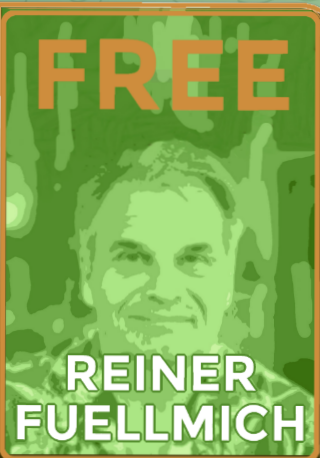
About Reiner Fuellmich
Reiner Fuellmich, born in 1958 in Bremen, Germany, is a lawyer known for his involvement in high-profile legal cases and controversial claims. He studied law at the University of Göttingen and as an exchange student at the University of California, Los Angeles, later earning his doctorate at Göttingen. From 1985 to 2001, he worked as a research assistant at the university’s medical and pharmaceutical law research center and served on the ethics committees of the University Hospitals of Göttingen and Hanover. Fuellmich also held corporate banking roles at Deutsche Bank in Germany and Japan from 1990 to 1992 before founding his own law firm in 1993. He gained recognition for his alleged role in the Volkswagen emissions scandal and for successfully suing Deutsche Bank in small mortgage cases. In 2009, his firm was ranked among Germany’s top 20 for investor protection, particularly in cases involving “junk real estate.”In 2020, Fuellmich co-founded the Corona Investigative Committee, a non-governmental group, claiming to document legal violations, medical malpractice, and scientific fraud related to the COVID-19 pandemic, which he called a “scandal.” His assertions, including criticisms of PCR tests and vaccines, have been widely criticized as misinformation. In 2022, he faced allegations of embezzling funds from the committee, leading to his arrest in Germany in October 2023 after extradition from Mexico. In April 2025, he was sentenced to 3 years and 9 months in prison for embezzlement, though he and supporters claim the charges were politically motivated to silence his activism. Fuellmich is a member of the German-American and German-Japanese bar associations and was licensed to practice law in California until July 2024.
Actions in favor of Reiner Fuellmich
We believe that Reiner Fuellmich is innocent and that he is convicted for political reasons. We have made several actions in support of him and to draw attention to what we believe is an wrongful imprisonment of him.
The Hocus Pocus Dancers has made a support event for Reiner Fuellmich in front of the German Ambasade in Copenhagen on Saturday, July 27, 2024.
It resulted in three clips. Here's the first of them.
SPACE GIRL MUSIC gives her tribute Reiner Fuellmich Duration 5 min ..
A chalk painting is made
This little video documents something magical. The creation is a beautiful joint work on the concrete floors in front of the German Embassy in Copenhagen. The police overlooked it all and people we didn't know came and helped. It is a huge pleasure to experience how people can play together and collaborate intuitively and effortlessly and vupti then we have a really nice and huge big painting. Thank you very much for everyone who participated.
Here is the third and last clips. Our very own Reiner Fuellmich Dance for our very own Reiner Fuellmich Track, borrowed from an old freedom hit and changed and adapted to fit our purpose.
On February 25, 2024, we also made an event to support Reiner Fuellmich in front of the German Embassy in Copenhagen. Here is a summary from that event.
About the court case
Regarding the sentencing of Reiner Fuellmich.
There have been a few critical comments on my previous post on the verdict of Reiner Fuellmich. People here asked how we can happily overlook that the man has stolen 700,000 euros from the box in the association he co -founded.
It hurts when people in that way put salt in an open wound, but at the same time I am happy about it because it gives a chance to elaborate and explain some conditions. The folliwing is not an in -depth explanation of all the aspects of the case, but it is an explanation of a very central aspect of the case that I think there are many who have not understood.
First of all, one must be quite clear that the money he has allegedly stolen is money that supports volunteer has donated to him.
The reason why you can use the term stolen is only if you can prove that the money has been spent in a way that the donors have not wanted.
It is the interpretation of the donor's desire which is the only criterion for assessing whether it is theft.
If the money had thus been collected for the clear purpose of going to Fuellmich personal house improvement then there would not be a finger to put on him using them for house improvements.
What determines whether it is theft is the contract or purpose for which money is given.
It is the contract we must try to understand if we want to give the matter a reasonable assessment.
The money is raised among people who share distinct skepticism to public bodies and in particular to the banking world.
Therefore, it is clear that if the money is to be stored in accordance with the desires of the donors then they should not stand in a bank account where the state can easily make sure they are frozen or confiscated.
They must be distributed and stored in ways where they are both protected from the long fingers of the system and where they are also protected as far as possible from an expected hyperinflation.
Nobody can be in doubt Fuellmich and Co's mistrust in banks and authorities. It is a core point of the group's communication.
Therefore, the group agrees that three of the group members keep the funds in ways other than in the bank. They can be invested in "bricks", gold or other.
The criterion here is that the money with a given deadline must be able to be converted into currency which can be used for the purpose for which they were donated.
If you understand that premise then you also understand why I mean that Fuellmich is innocent. He did here with the money exactly as shown in the written contract and there is no indication that it has been his purpose to steal the money. He has simply wanted to protect them in the best possible way according to the spirit the money has been donated in and in accordance with the donors' wish.
However, it gets even wilder when you find out that the authorities have already seized the funds that the cade concerns. They did so when Fuellmich sold the house in which the funds were placed. The authorities simply seized the money from the sale before Fuellmich received them. That means that, it is actually the authorities who have stolen the money from the donors cause you can be absolutely sure that it is not in the interest of the donors that the authorities manage the money.
Dialog about the charges and the trail
Dialogue between Gustav and me about the premise of the recently issued judgment against Reiner Fuellmich.
I think the dialogue here is very enlightening in the sans that it reflects the argument in the trial against Reiner Fuellmich.
Gustav's arguments reflect very well the prosecutor's argument in the case. My arguments reflect very well the defender's arguments in the case.
Thus, who is curious will be able to use this dialogue to understand the arguments that are at play and from it form their own attitude.
First of all, I think the dialogue reflects that it is not a clear case like Gustav otherwise tries to make it sound like. That it is largely a case that is based on interpretation.
I also just have to say that I have cut into dialogue. The original dialogue took place underneath one of my recent posts on Facebook about Reiner Fuellmich. It also contained an interesting dialogue about sentencing. This dialogue I have cut out for the sake of clarity.
Below you can read the dialogue between Gustav and Mikkel regarding the trial against Reiner Fuellmich.
================
Gustav writes: Explain just how it is justified to "store" money by investing in once own house and gardening. As well as in a new spa.
Mikkel writes: You invest in house improvements in a house that you have a plan to later sell which is the case in this case.
Gustav writes: AH so he plans to sell his own house. And then he "improves" it just for other people's money. Yes it sounds like illegal and clean under tow. I know as self -employed that it is illegal that my company lends me money or buys my home or invest in my garden, etc. I think things are as in Germany.
Gustav writes: When money is collected for a common purpose in an organization, it is no longer a private relationship. If you use the funds for yourself without agreement, it is embezzlement under applicable law - no matter how you personally experience reasonableness. This is how the justice system works and therefore the verdict makes sense. What he has done has not been approved in the common framework (the Corona-Ausschus rules). It is even very clear when it is his own former partners who have reported him. You also can't find anything in their values that says something else. As a lawyer, he should of course know better. These rules are completely elementary. There are no "unreasonable" laws or similar at stake here. There must be responsibility and control of common funds, especially when there is a lot of money and a public collection. That's what the law must facilitate.
Mikkel writes: "Keeps that it would be 100% illegal in Denmark what he did. So it is probably in Germany too." But do we agree if it was clearly defined in advance for those who gave the money that they would be usef improvements to the Reiner Fuellmich own house then it would be fully legal?
Gustav writes: It is possible that you will be able to write it into some statutes. Or set off funds for remuneration or the like. But you cannot withdraw funds from an association or business for private use as such. Nor under the pretext of loan or storage. Both would be illegal.
Mikkel writes: I am not talking about pulling funds out of anything. I am talking about using collected funds for the purpose for which they were collected. So in other words, is it illegal to make a fundraiser to support house improvements and then spend the money raised for house improvements?
Gustav writes: I don't know. I think it's probably legal if otherwise VAT and tax will be answered correctly.
Gustav writes: Here you have their statutes: Satzung Sittung Corona aufschuss
Gustav writes: Here you actually have it black and white: section 2 pcs 3. Die Gesellschaft Verfolgt Ausschließlich und Unmittal Gemeinnützige Zwecke im Sinne des Ab-Schnitt's "Steuerbegünstigte Zwecke" der abgabenordnung. Die Gesellschaft ist Selbstlos Tätigund Verfolt nicht in replace Line Eigenwirtschaftliche Zwecke. Mittel there gesellschaft dürfen nurDOK-ID 635877Axle: 20-00886 N.für die Satzungsmäßigen Zwecke Verwendet Werden. Die Gesellschater Erhalen Keine Zuwen-Dung Aus Mitteln der Gesellschaft. Keine Person Darf Durch Ausgaben, Die them Gesellschafts-Zweck Forward Mind, Oder Durch Unveorhältnismäßig Hohe Vergütungen Begünstigt Werden. DieGesellschater Erhalen Bei Ihrem Ausscheiden Oder Bei Auflösung der Körperschaft Oder BeiWegfall Steuerbegünstiger Zwecke Nicht Mehr Als Ihre Eingezahlten Kapital Anti-and the Ge-Meinen Wert Ihrer Geleisteten Sacheinlagen Zurück. I think you are good enough in German to read that the core is: Funds may only be used for statutory purposes.No one should get private benefits of the funds.No person may receive unreasonable payments or enriched on community funds.
Mikkel writes: "I think it's probably legal if otherwise VAT and tax will be answered correctly."
Well let's just hold on to that.
That is to say that what is crucial to whether the money has been used legally or illegally is the framework for the agreement under which they are given.
If we assumed it was a clear agreement with the donors that the money is not stored in the bank, but that they were instead invested in real estate for later sales whereby the funds could again be released for their purpose then this should be legal.
Gustav writes: I don't know where you want to go with your thought examples. The reality is that the money goes to Corona-Ausschuss' information and judicial work, not for private properties or spa baths. When using money in violation of this purpose, it is abuse, no matter what you try to call it afterwards. You can see the statutes in the above.
Mikkel writes: You know very well where I want to go, but you are struggling to avoid it 😉 😄
Gustav writes: No tell me.
Mikkel writes: Your argument is based on the fact that if you use funds from an association fund for private purposes, this is a clear violation of the law.
I understand that.
I point out that if you use collected funds for the purpose that they are collected for it is not illegal.
If we follow my reasoning then the crucial question is whether the funds raised have been used for the purpose described and in the way described.
The last is a far more interpretation -based trade -off than the first. For example, in the trial, it has been a questioned whether it could be proven that RF had not intended to make the funds in question available for the continued work on the case they were donated to. This has not been proved. RF Explanation that the money was temporarily placed in the house in order for later sales which would detach them have not been disproved.
You can say that you do not think he intended to detach them again. You can believe many things and you are allowed to do so, but it has not been proven that RF's explanation was wrong.
Gustav writes: I just linked their statutes. It is very clear that it cannot be interpreted that you can transfer the money to your own accounts and build spa and do gardening and refurbish your own home. He is apparently also the only one in the organization who has had that opinion, as well as the German legal system. It's bell clear. Mikkel his own co -founders have reported him for God sake.
Mikkel writes: I must say you are good at sounding convincing Gustav. However, I think in all humility that I have investigated the case more thoroughly than you have 😄. The association is run by three experienced lawyers. The division of the common in three portions is well documented and legally designed. The exchange of large parts of the common currency for gold in private storage is well documented also. The choice to try to avoid bank account storage is well described in the documents and it is all made with signed documents and appointments.
I do not deny that there can be doubt about the legitimacy of RF's management of the share that was transferred to him. Many things in this world can be subject to doubt. Many things can be discussion and interpretation. But there is not a belligerent rule breach as you are clamming. 🙂
Gustav writes: I don't know anything about gold or the like. This is also the case in this context. It is clear if you look at the organization's construction I share- that in this structure all partners have equal rights and responsibilities, unless otherwise agreed. Therefore, decisions on the use of funds demanded unanimity or at least the approval of the other partners. According to the indictment, Fuellmich made decisions on the use of funds without such approval, which led to embarrassment charges. So, without the permission of the other three, he has taken these money and spent on his own house, and transferred to his own account. It's illegal Mikkel. Even if there had been a previous agreement between all parties that he had to rebuild his house it would be illegal because it contradicts the statutes which are solely about research, information, pandemic handling, etc. Strafanzige
Mikkel writes:No we are approaching something a bit more realistic. I'm happy about that.
"It is clear if you look at the organization's construction I share- that in this structure all partners have equal rights and responsibilities, unless otherwise agreed. Therefore, decisions on the use of funds demanded unanimity or at least the approval of the other partners."
The decision to divide the funds into three portions was approved by all parties in the board and it was done openly and following accepted rules. The decision to store funds possibly outside banks was openly discussed and commonly agreed upon. There is actually nothing of what RF is doing with his assigned part of the funds that is clearly offending the written agreements between the parties in the board. There is only an assumption and an acquisition that RF was stealing his share of the funds.
Gustav writes: I say the same as all the time. You do not store money by rebuilding your house and buying spa baths and getting your garden reshaped. It should be 100% clearly over time. I simply cannot think of a single residual case about embezzlement, where you have claimed that you have "stored" or "invested" in your own cars, houses, holidays, wines, children, etc., and have won. It is very clear to anyone eventually. Well also you- and then just one last detail: there are no "personal shares" in a non-profit company.The funds belong to the organization - not the individuals.You can't just share the money as private savings and say, "This is mine." So no. Private use of the funds (such as gardening, spa bath, payment of private bills) can never be covered by any storage agreement. No matter how the money was "stored," private consumption is still illegal and thus embezzlement. That's exactly what RF's partners and the German state have meant. and 100% justified.
Mikkel writes: You get the last word Gustav. I am grateful that this dialogue has given me the opportunity to very precisely explain the terms and dilemmas of the case.
